
What is the mean of Wind of Change ?
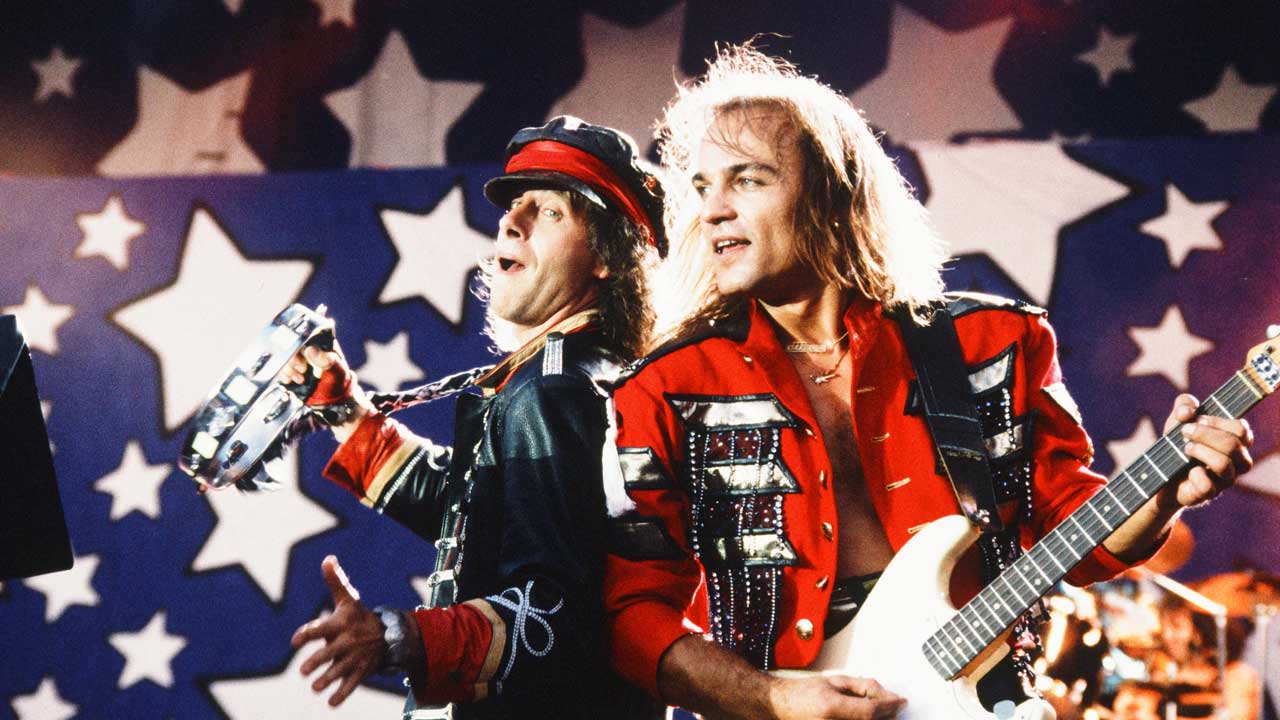
“Wind of Change” is a song by German rock band Scorpions, recorded for their 11th studio album, Crazy World (1990). A power ballad, it was composed and written by the band’s lead singer, Klaus Meine, and produced by Keith Olsen and the band. The lyrics were composed by Meine following the band’s visit to the Soviet Union at the height of perestroika, when the enmity between the communist and capitalist blocs subsided concurrently with the start of large-scale socioeconomic reforms in the Soviet Union.
“Wind of Change” was released as the album’s third single on 21 January 1991 by Mercury and Vertigo Records. The song became a worldwide hit, just after the failed coup that would eventually lead to the end of the Soviet Union. The song topped the charts in Germany and six other countries across Europe, and it also peaked at number four in the United States and at number two in the United Kingdom. It later appeared on the band’s 1995 live album Live Bites, their 2000 album with the Berlin Philharmonic Orchestra, Moment of Glory, and on their 2001 “unplugged” album Acoustica. The band also recorded a Russian-language version of the song, under the title “Ветер перемен” (“Veter Peremen”) and a Spanish version called “Viento de Cambio”.
With estimated sales of 14 million copies sold worldwide, “Wind of Change” is one of the best-selling singles of all time. It holds the record for the best-selling single by a German artist. The band presented a gold record and $70,000 of royalties from the single to Mikhail Gorbachev in 1991, with Soviet news sources reporting the money would be allocated to children’s hospitals.
Background and writing
Klaus Meine said in an interview that the time 1988/1989 in the Soviet Union was characterized by the mood that the Cold War was coming to an end, the music was the unifying factor for the people. The memories of this time are also transported in the music video for the song. Meine was inspired by his participation in the Moscow Music Peace Festival on 13 August 1989, at Lenin Stadium, where the Scorpions performed in front of about 300,000 fans:
Die Idee dazu ist mir in der U.d.S.S.R. gekommen, als ich in einer Sommernacht im Gorki Park Center saß und auf die Moskwa geblickt habe. Das Lied ist meine persönliche Aufarbeitung dessen, was in den letzten Jahren in der Welt passiert ist.
The idea came to me in the U.S.S.R. when I was sitting in the Gorky Park Center one summer night, looking at the Moskva River. The song is my personal reappraisal of what has happened in the world in recent years.
— Klaus Meine, Friede, Freude, Hasch und Perestroika, in: Rocks. Das Magazin für Classic Rock, Heft 01.2014, S. 88
Meine referred to the ‘SNC’ cultural center, opened by Stas Namin inside Moscow’s Gorky Park without any official permission, where Russian and international musicians as well as progressive poets, artists and designers met in a free, innovative atmosphere. The lyrics celebrate glasnost in the Soviet Union, the end of the Cold War, and speak of hope at a time when tense conditions had arisen due to the fall of Communist-run governments among Eastern Bloc nations beginning in 1989. The opening lines refer to the city of Moscow’s landmarks:
I follow the Moskva
Down to Gorky Park
Listening to the wind of change
The Moskva is the name of the river that runs through Moscow (both the city and the river are named identically in Russian), and Gorky Park is an urban park in Moscow named after the writer Maxim Gorky. The song further mentions the balalaika, the signature Russian stringed instrument, as a counterpart to the guitar, suggesting harmony of different cultures. The balalaika is mentioned in the following lines:
Let your balalaika sing
What my guitar wants to say
Klaus Meine and Rudolf Schenker are owners of the trade mark Wind of Change.
Composition
“Wind of Change” opens with a clean guitar introduction played by Matthias Jabs, which is played alongside Klaus Meine’s flat whistle. The song’s guitar solo is played by Rudolf Schenker.
Let’s say this first: Wind Of Change is arguably one of the most monumental and best-recognised power ballads of all time, and it’s also arguably the commercial apex for Scorpions, who by then had already been responsible for more hits than their humble Hanover origins might have suggested back in 1965.
Sure, Blackout was big, but Wind Of Change alone has sold over 14 million copies. If the story of this anthemic juggernaut was just about sales nobody would care, but then this is no mere song.
At its core it’s a simple tune about a changing world, and it was inspired by what Scorpions bore witness to when they played the Moscow Music Peace Festival in August of 1989 in front of 300,000 fans at Lenin Stadium alongside Ozzy Osbourne, Motley Crue, Cinderella, and Skid Row. Moved by the experience and the fervour of the crowd, Klaus Meine began to write. Not the most confident guitarist, the singer whistled the lead melody instead.
What resulted was a stirring snapshot of a unique moment in time while the world watched and awaited the outcome of Soviet Premier Mikhail Gorbaciev’s doctrine of Glasnost and Perestroika. Nobody knew where it was leading, but after decades of Cold War anxiety it was a time charged with optimism and a mounting belief in new possibilities, and Scorpions had just written a song to match the zeitgeist, only nobody knew it – yet.
And while it’s only possible to speculate on what that Soviet experience meant to the likes of Vince Neil or Sebastian Bach, there’s no question it would have resonated with a West German band who grew up in the shadow of the Iron Curtain within generational memory of the Reich.
It’s perhaps for that reason that an amusing but intriguing take on the song’s origin – 2020’s Wind Of Change podcast, which posits that the CIA had something to do with producing wind Wind Of Change, could possibly be taken with a pinch of salt. Unless…
“It’s because the story is good, the story is great!” says Rudolf Schenker.
“We live in crazy times,” says Klaus. “When I was confronted by this [CIA] theory, I cracked up laughing. You know, it’s really crazy. But this podcast became very, very successful around the world between New York City and Sydney, in Australia. And you could hear everybody saying, ‘You’ve got to listen to this podcast’ you know, as crazy as it is, you know?
“Patrick Radden Keefe, a journalist who works for The New Yorker – he came all the way to Germany, just to tell me in the middle of the interview, ‘Klaus, have you heard the story that the CIA wrote Wind Of Change?’ And I was like, ‘What?! Say that again?’ But then I said, if that were true, it only proves the power of music.”
Contributing to this mythos is of course the fact that the Berlin Wall came down a few months after the Moscow Peace Festival in November of 1989, but Wind of Change wasn’t released until a year later as track four on 1990’s Crazy World album. Even then, it was only released as a single in January of 1991 in Europe – the album’s third after Tease Me, Please Me and Send me an Angel.
“It was released much later because as we always said, ‘Hey, we are rock band, you know, first single off the album would be a rocker. Second single would be another rock song, you know?” says Klaus. “And then somebody figured out, ‘okay, maybe Wind Of Change could be a nice single.’ But it was nothing to do with marketing. Back in those days no one said, ‘you know, since the Berlin wall came down, this would be a great song for this moment in time’. Nobody said that.”
It was arguably Wind Of Change’s promo video however which used footage of turmoil, including the fall of the Berlin Wall, which captured imaginations in every time zone and distilled an important feeling. Politically, massive change was underway. Communism was collapsing, and the Soviet Hammer and Sickle would fly above The Kremlin for the last time in December of that same year. Finally, there was a song to match, and it came from a very real place.
“We grew up in the shadow of the Berlin Wall in a way, you know,” says Klaus. The divided country and the Berlin Wall, this was just a fact, it was a reality of our lives being German citizens. In the early days, when we played shows in Berlin, you had to go through the transit autobahn, and the first checkpoint – Helmstedt – is just 100km away from where we grew up. People were getting killed, getting shot when they tried to make it from the East to the West, you know, and, of course, it’s a different story from the English perspective, or British perspective, or American perspective.
“This was our reality. And this was after the war, when the country was divided into all these different zones, and when the wall came down, it was such an emotional moment, in European, in world history. You never can write a song for, for a historical event like this, it’s impossible. But the reason or the fact that Wind Of Change, for so many people, brings back the memories of this historical moment in time.”
So what does Wind Of Change mean 30 years on? While it’s inseparable from that transformative moment, more recently Klaus Meine told Ukraine’s TCH that the recent invasion by Russia left him with mixed feelings about the song.
- How To Clean Your Ears Safely

- What to Know About Being Unable to Control Emotions

- Top 7 AI-Powered Wearables for Longevity and Biohacking in 2026

- Beginner’s guide to cryptocurrency trading strategies

- Hippies: The 1960s Youth Movement That Redefined Freedom, Peace, and Love
- What is soft skill? Definition, Importance, and Examples


Thanks
Hello C4A 🌹🍀
Looks c4a admin and I have same taste in music 🎧
ကောက်ရိုးမီးမဟုတ်
ရောက်ရှိ သတိရ
Thanks for your sharing 😊
Hello
❤❤❤❤
I also hoping for a better future of our country, Myanmar!!!
Nice song….thank much!
Listening to the Wind of Change 🎧
Thanks
Great thanks 😘
ကျေးဇူးပါ
The explanation really shows how powerful the message of hope and change is behind the song. Thanks for sharing.
Mingalarpar
Thanks
သူတို့အဖွဲ့ရှိသေးတယ်လား ငယ်ငယ်ကကြားဖူးတာပဲ
Hello 🤗 C4A 🍀
Thanks for sharing…….. 💞
morning 🌄🌞🌄